Yemen discusses with the IMF the decision to resume Article IV consultations and the subsequent steps
[15/04/2026 01:42]
Washington - Saba:
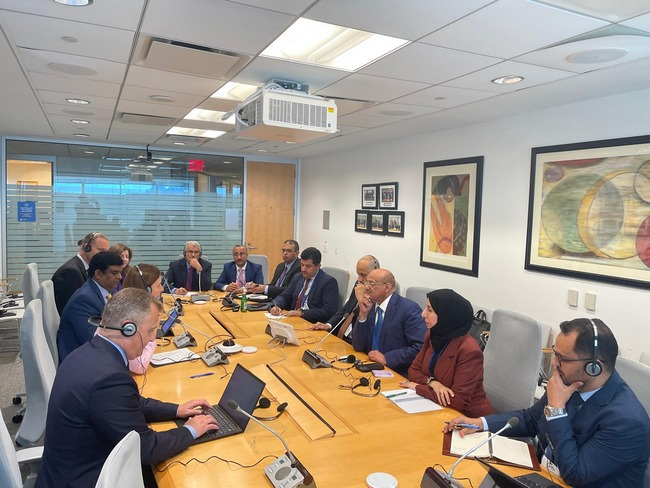
The Governor of the Central Bank of Yemen and IMF Resident Representative for the Republic of Yemen, Ahmed Ghalib, accompanied by Finance Minister Marwan bin Ghanem and Minister of Planning and International Cooperation Dr Afrah Al-Zuba, discussed in a joint meeting with the Head of the IMF Mission to Yemen, Esther Perez, the IMF Executive Board’s decision to resume Article IV consultations with the Republic of Yemen, following a hiatus lasting several years.
The meeting, held on the sidelines of the April 2026 Spring Meetings of the World Bank Group and the International Monetary Fund in the US capital, Washington, reviewed the next steps following this decision, including the creation of the technical and institutional conditions for entering into a surveillance programme led by IMF experts, with the aim of addressing existing imbalances in fiscal and monetary policies, as part of a comprehensive economic reform programme that paves the way for accessing the financing instruments offered by the Fund, and contributes to supporting economic recovery efforts and improving living conditions and public services in the country.
The meeting also addressed the repercussions of ongoing developments in the Middle East and their impact on the economies of the region and the world, including Yemen, which have included rising insurance and shipping costs, and increases in energy and commodity prices, which exacerbates pressure on public finances and compounds the challenges associated with meeting citizens’ basic humanitarian needs for food, medicine and public services.
The meeting also discussed the measures and policies the Yemeni government intends to adopt to mitigate these repercussions, as part of an integrated approach that balances the requirements of economic stability with the response to urgent humanitarian needs.
.jpeg?token=8078738fa50e0ad1e18866d0c42b27c7)
.jpeg?token=78332084da7ed92587853a7ca15677a1)
.jpeg?token=f8a490df57292f471580b5e94b29b4a8)
.jpeg?token=eee629cb029f52b7486362d2b7121b84)
.jpeg?token=51cb0ea45708d943e3d4775453a80548)
.jpeg?token=526dd7c0cf180cb4ee0be008c83cce6f)
.jpeg?token=792d01f7013afa58fdbf6673db984dff)
.jpeg?token=32e9cb29b5f0f683fa8da6fd7251a02d)