Minister of Planning Outlines the Humanitarian and Economic Impact of the Regional Crisis on Yemen
[16/04/2026 11:43]
Washington – Saba
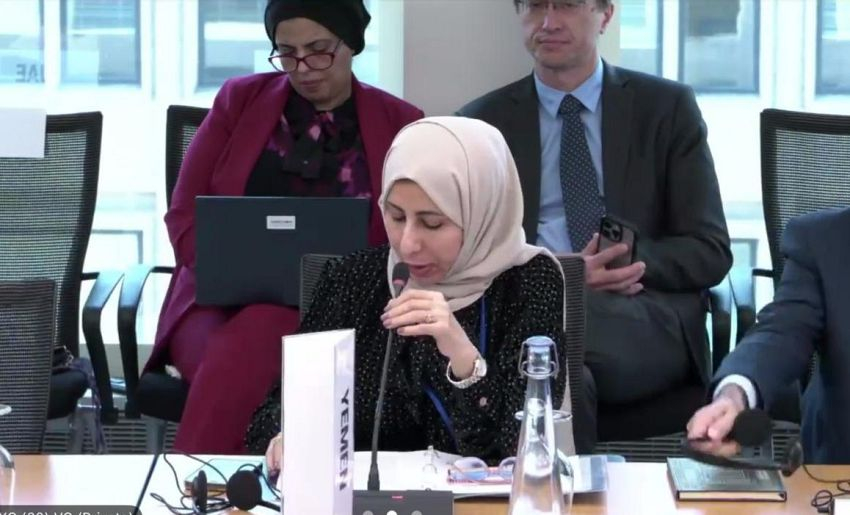
The Minister of Planning and International Cooperation, Yemen’s Governor to the World Bank Group, Dr Afrah Al-Zuba, participated in the extraordinary meeting of World Bank Governors for the Middle East and North Africa region, held in the US capital Washington, to discuss the repercussions of the current crisis in the region and the World Bank Group’s operational response.
The meeting, which took place on the sidelines of the 2026 Spring Meetings of the World Bank Group and the International Monetary Fund, featured contributions from governors of countries in the region, during which they outlined the humanitarian and economic impacts of the current crisis on their nations and submitted requests to the World Bank Group to strengthen the response and provide the necessary support to address these repercussions.
In her address, Dr Afrah Al-Zuba outlined the profound humanitarian and economic repercussions of the regional crisis on the Republic of Yemen, emphasising that Yemen is one of the most affected countries and least able to absorb shocks, following more than a decade of conflict.
On the humanitarian front, Minister Al-Zuba explained that the crisis has exacerbated the suffering of millions of Yemenis who rely on aid, deepened the child malnutrition crisis, and weakened citizens’ ability to access food, fuel and medicine at affordable prices.
She also noted that, economically, the crisis has increased import and shipping costs in the Red Sea and the Bab al-Mandab Strait, and reduced remittances from expatriates, which will put further pressure on the balance of payments.
She emphasised that the Yemeni government remains committed to the reform process despite these challenges, outlining efforts to prepare the National Development Plan, reform public financial management, establish a public-private partnership framework, and rebuild national institutions.
The Minister of Planning and International Cooperation called on the World Bank Group to help Yemen become eligible to fully benefit from crisis response tools, to stand by fragile and conflict-affected states, and to accelerate projects that support job creation and institution-building, in addition to supporting the sovereign debt resolution process in coordination with the International Monetary Fund.
.jpeg?token=8078738fa50e0ad1e18866d0c42b27c7)
.jpeg?token=78332084da7ed92587853a7ca15677a1)
.jpeg?token=f8a490df57292f471580b5e94b29b4a8)
.jpeg?token=eee629cb029f52b7486362d2b7121b84)
.jpeg?token=51cb0ea45708d943e3d4775453a80548)
.jpeg?token=526dd7c0cf180cb4ee0be008c83cce6f)
.jpeg?token=792d01f7013afa58fdbf6673db984dff)
.jpeg?token=32e9cb29b5f0f683fa8da6fd7251a02d)