Deputy Minister of Planning Discusses Ways to Address the Food Gap and Strengthen Nutrition Programmes with Food Security Partners
[25/06/2026 01:27]
Aden – Saba News
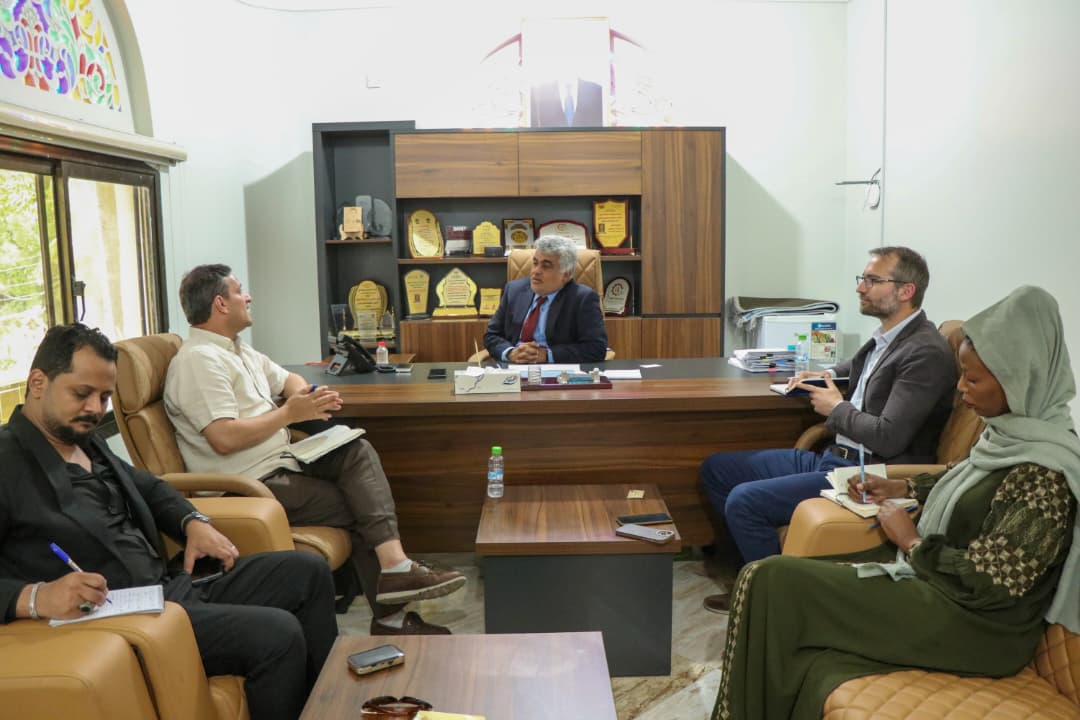
The Deputy Minister of Planning and International Cooperation, Dr Nizar Basheeb, met today in the temporary capital, Aden, with the Global Coordinator of the Food Security Cluster at the Food and Agriculture Organisation (FAO), Abdo Al-Majid, and the Programme Manager at the World Food Programme, Ramien Fakien, discussed ways to bridge the food gap and tackle malnutrition through available solutions to compensate those affected by cuts in humanitarian aid.
The meeting, attended by FAO experts, addressed food security indicators for the current year, the areas most affected by reduced access to food and the resulting rise in malnutrition rates, and discussed proposed practical steps to increase the nutritional value of food parcels, as well as expanding cash transfer programmes and providing support for food security and livelihood projects to address the mounting challenges resulting from the decline in food aid funding.
The Deputy Minister of Planning and International Cooperation emphasised that the food gap gives rise to numerous humanitarian and health consequences, foremost among which is rising malnutrition rates among children, women and the most vulnerable groups. He noted that the main challenge lies in strengthening joint action between the government and UN organisations to address existing funding gaps by mobilising alternative sources of funding for nutrition and food security programmes, and focusing on sustainable development projects that contribute to enhancing the resilience of local communities and their ability to adapt to the current economic and humanitarian conditions.
He emphasised the need to find practical and sustainable solutions through the implementation of emergency interventions to improve food security, expand livelihood projects, increase the caloric content of food aid, and review targeting mechanisms to ensure that support is directed to the areas and groups most in need.
For their part, officials from the FAO and the WFP outlined the challenges facing food security and nutrition programmes in Yemen as a result of the continuing decline in humanitarian funding. They emphasised the importance of strengthening coordination with the government and donors to secure the necessary resources, ensure the continuation of life-saving humanitarian interventions, and expand programmes supporting economic recovery and improved livelihoods.
The Deputy Minister of Planning and International Cooperation also discussed the latest developments and current humanitarian needs with Peter Ekayo, the new Deputy Director of the United Nations Office for the Coordination of Humanitarian Affairs (OCHA) in Yemen.
The two sides discussed mechanisms for strengthening coordination between the government and the UN Office for the Coordination of Humanitarian Affairs, and for mobilising international support for priority sectors, thereby helping to alleviate human suffering and improve the level of basic services provided to citizens across the various governorates.
Translated with DeepL.com (free version)
.jpeg?token=8078738fa50e0ad1e18866d0c42b27c7)
.jpeg?token=78332084da7ed92587853a7ca15677a1)
.jpeg?token=f8a490df57292f471580b5e94b29b4a8)
.jpeg?token=eee629cb029f52b7486362d2b7121b84)
.jpeg?token=51cb0ea45708d943e3d4775453a80548)
.jpeg?token=526dd7c0cf180cb4ee0be008c83cce6f)
.jpeg?token=792d01f7013afa58fdbf6673db984dff)
.jpeg?token=32e9cb29b5f0f683fa8da6fd7251a02d)