Deputy Minister of Planning Discusses Digital Transformation and Strengthening Nutrition and Health Programmes with the World Bank and UNICEF
[30/06/2026 04:04]
Aden – Saba News
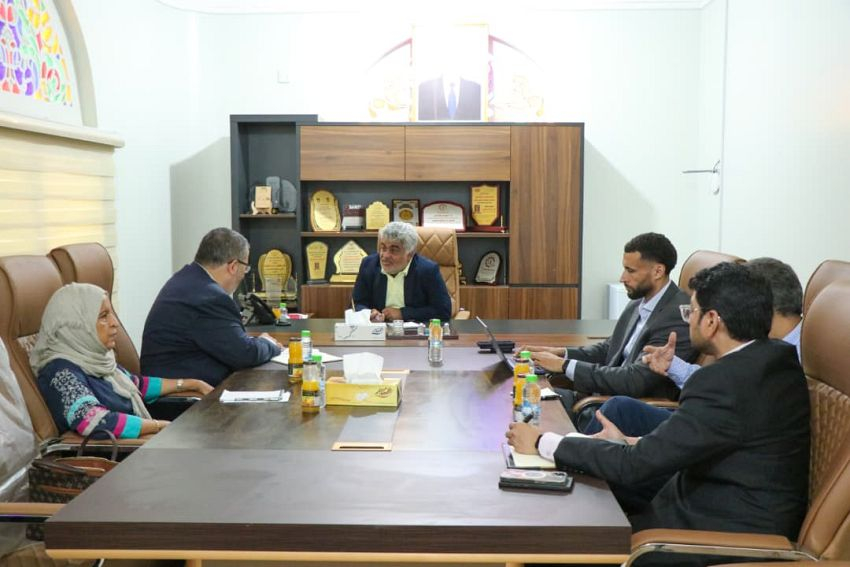
The Deputy Minister of Planning and International Cooperation, Dr Nizar Basheeb, met today in the temporary capital, Aden, with a delegation from the World Bank comprising digital specialist Essam Khayyat and a number of other experts, to discuss areas of cooperation in digital transformation and the development of digital infrastructure for government services.
The meeting addressed the best ways to support digital transformation projects for public services, strengthen the cybersecurity framework, and implement initiatives aimed at developing the infrastructure of the information and communications technology sector.
The Deputy Minister of Planning emphasised the importance of channelling World Bank support towards sustainable development projects, foremost among which are digital transformation projects that contribute to enhancing the efficiency of government performance and improving the quality of services provided to citizens. He stressed the need to build the capacity of national personnel and train them in the fields of digital transformation and cybersecurity, in line with global technological developments.
For his part, the World Bank’s digital specialist affirmed the Bank’s commitment to supporting the government’s efforts in the field of digital transformation, noting his interest in developing the infrastructure of the communications and information technology sector, including submarine cables and international connectivity, thereby enhancing Yemen’s readiness for digital transformation.
The Deputy Minister of Planning and International Cooperation also discussed with Obia Ashing, UNICEF’s Deputy Resident Representative for Programme Affairs in Yemen, the level of implementation of the organisation’s programmes and ways to strengthen cooperation in the areas of nutrition, health, water and child protection.
Dr Basheeb emphasised the importance of directing the organisation’s interventions towards priority programmes, foremost among which are tackling stunting and malnutrition among children and women, and conducting field surveys to update data and measure the progress made in reducing these phenomena, thereby helping to guide interventions more effectively. He stressed the need to expedite the implementation of the project to localise the food industry, specifically in the area of nutritional supplements, and to open the market to specialised companies to foster competition, thereby enhancing food security and supporting sustainable development efforts.
For his part, the Deputy Resident Representative of UNICEF outlined the organisation’s priorities and plans for the current year, as well as the interventions being implemented in a number of governorates. He explained that the organisation is working to implement an integrated programme centred on three main pillars: nutrition, health and water, to help improve the humanitarian and developmental conditions of the most vulnerable groups in Yemen.
.jpeg?token=8078738fa50e0ad1e18866d0c42b27c7)
.jpeg?token=78332084da7ed92587853a7ca15677a1)
.jpeg?token=f8a490df57292f471580b5e94b29b4a8)
.jpeg?token=eee629cb029f52b7486362d2b7121b84)
.jpeg?token=51cb0ea45708d943e3d4775453a80548)
.jpeg?token=526dd7c0cf180cb4ee0be008c83cce6f)
.jpeg?token=792d01f7013afa58fdbf6673db984dff)
.jpeg?token=32e9cb29b5f0f683fa8da6fd7251a02d)